Scientists say they have discovered three lakes of water buried under the surface near the South Pole of Mars.
Scientists have confirmed that there is a fourth lake, the presence of which was\ BERLIN
Scientists say they have discovered three lakes of water buried under the surface near the South Pole of Mars.
Scientists have confirmed that there is a fourth lake, the presence of which was indicated in 2018.
Because water is important to biology, this discovery is of interest to researchers studying the possibility of life on other planets in the solar system.
But it is thought that these lakes could be so salty that it would be extremely difficult for microscopic creatures found in them to grow on Earth.
Scientists believe that water from rivers flowing on the surface of Mars accumulated in these lakes billions of years ago. However, Mars's atmosphere and climate have changed dramatically, meaning that water can no longer stay in liquid form on the surface of Mars.
However, conditions below the surface of Mars may vary.
The scientists made the latest discovery using data from the European Space Agency's (ESA) Mars Express spacecraft's radar device, which has been orbiting the Red Planet since December 2003.
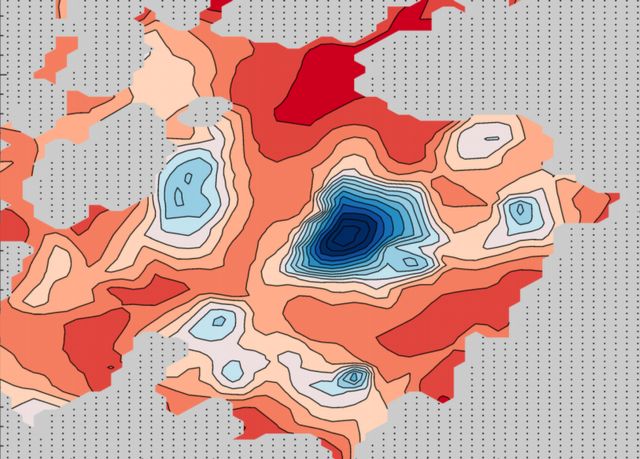
And in 2018, using data from Mars' radar, researchers found signs of a lake 20 kilometers wide beneath a sub-surface of Mars and 1.5 kilometers below the planet's south pole layers. It was under layers of snow and dust.
"There is a national possibility that these lakes existed in the past," Dr Roberto Orosi of Italy's National Astronomical Institute told the BBC, referring to the underlying lakes.
"It's a sign that there has been life or something similar on the planet in the past and you can find it."
"Mars is severely affected by climate change and is changing from an obscure hot planet to a cold one," he said. There was a place where life could be possible.
, IMAGE SOURCENATURE
, Photo caption
There are three small reservoirs around a large lake
However, the search was based on 29 observations compiled between 2012 and 2015. Currently, a team consisting of several scientists who participated in the 2018 study analyzed a large data set of 134 files collected by radar between 2010 and 2019.
"Our 2018 study not only confirmed the location, range and strength of these membranes, but also found three new bright areas," said Elena Patinelli, a co-researcher at Rome Tree University in Italy.
"There are small reservoirs of liquid water around the main lake, but due to the technical characteristics of the radar and the distance from the surface of Mars, we cannot determine whether they are interconnected or not," he added.
The team used a technique used to radar-test lakes under avalanches in Antarctica, Canada and Greenland.
Sebastien Lauro, co-author of the University of Rome, says: "The best explanation we can get from all the available evidence is that (from Mars) the reflections are more intense than the pools of liquid water."
, IMAGE SOURCEESA / DLR / FU BERLIN / BILL DUNFORD
, Photo caption
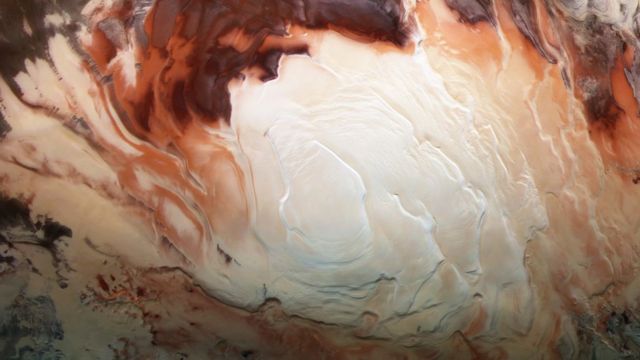
These reservoirs of liquid water have been discovered at the South Pole of Mars
Since there is not enough heat in these depths of the planet to melt ice, scientists believe that liquid water must contain high amounts of dissolved salts. Therefore, these chemical salts (which are different from the salts we use) can rapidly reduce the freezing point of water.
"In fact, recent experiments have shown that water containing dissolved salts containing magnesium and calcium perchlorate (a chemical compound containing four oxygen atoms, chlorine) has a temperature of minus 123 degrees Celsius," she says. May remain liquid at heat.
"These experiments have shown that saline solutions can remain liquid for long periods of time, even at specific temperatures in Martin polar regions (below the freezing point of pure water)."
The probability of life in such conditions depends on how salty these pools of water below the surface of Mars are.
, IMAGE SOURCENASA / JPL-CALTECH
, Photo caption
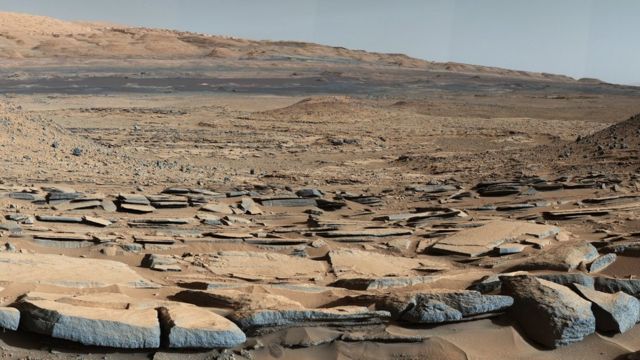
Mars is like a frozen desert right now
Only the most specific type of microorganisms on Earth, known as halophylls, can survive in saltwater reservoirs.
According to researcher Dr. Orosi, although the existence of a single semi-glacial lake can be attributed to unusual conditions such as the existence of volcanoes under an ice sheet, the discovery of an entire system of lakes shows that their formation The process is relatively simple and common and these lakes are relatively simple and common. It must have been on Mars since ancient times.
Dr. Orosi says he is still researching whether life is possible in conditions such as those in the lakes.
"These lakes are high in salinity and unsuitable for life," he said. However, he added that "there is still a lot of work to be done."
"Right now, there may be traces of life in the dense atmosphere of Mars, with a milder climate and surface water soluble than in the early days of the planet," he added.
According to Dr. Orosi, the team's work has not yet been completed and more daScientists say they have discovered three lakes of water buried under the surface near the South Pole of MScientists have confirmed that there is a fourth lake, the presence of which was indicated in 2018.
Scientists say they have discovered three lakes of water buried under the surface near the South Pole of Mars.
Scientists have confirmed that there is a fourth lake, the presence of which was indicated in 2018Because water is important to biology, this discovery is of interest to researchers studying the possibility of life on other planets in the solar system.
But it is thought that these lakes could be so salty that it would be extremely difficult for microscopic creatures found in them to grow on Earth.
Scientists believe that water from rivers flowing on the surface of Mars accumulated in these lakes billions of years ago. However, Mars's atmosphere and climate have changed dramatically, meaning that water can no longer stay in liquid form on the surface of Mars.
However. conditions below the surface of Mars may vary.
The scientists made the latest discovery using data from the European Space Agency's (ESA) Mars Express spacecraft's radar device, which has been orbiting the Red Planet since December 2003.
And in 2018, using data from Mars' radar, researchers found signs of a lake 20 kilometers wide beneath a sub-surface of Mars and 1.5 kilometers below the planet's south pole layers. It was under layers of snow and dust.
"There is a national possibility that these lakes existed in the past," Dr Roberto Orosi of Italy's National Astronomical Institute told the BBC, referring to the underlying lakes.
"It's a sign that there has been life or something similar on the planet in the past and you can find it."
"Mars is severely affected by climate change and is changing from an obscure hot planet to a cold one," he said. There was a place where life could be possible.
, IMAGE SOURCENATURE
, Photo caption
There are three small reservoirs around a large lake
However, the search was based on 29 observations compiled between 2012 and 2015. Currently, a team consisting of several scientists who participated in the 2018 study analyzed a large data set of 134 files collected by radar between 2010 and 2019.
"Our 2018 study not only confirmed the location, range and strength of these membranes, but also found three new bright areas," said Elena Patinelli, a co-researcher at Rome Tree University in Italy.
"There are small reservoirs of liquid water around the main lake, but due to the technical characteristics of the radar and the distance from the surface of Mars, we cannot determine whether they are interconnected or not. he added.
The team used a technique used to radar-test lakes under avalanches in Antarctica, Canada and Greenland.
Sebastien Lauro. co-author of the University of Rome, says. "The best explanation we can get from all the available evidence is that (from Mars) the reflections are more intense than the pools of liquid water."
, IMAGE SOURCEESA / DLR / FU BERLIN / BILL DUNFORD
, Photo caption
These reservoirs of liquid water have been discovered at the South Pole of Mars
Since there is not enough heat in these depths of the planet to melt ice, scientists believe that liquid water must contain high amounts of dissolved salts. Therefore, these chemical salts (which are different from the salts we use) can rapidly reduce the freezing point of water.
"In fact, recent experiments have shown that water containing dissolved salts containing magnesium and calcium perchlorate (a chemical compound containing four oxygen atoms, chlorine) has a temperature of minus 123 degrees Celsius," she says. May remain liquid at heat.
"These experiments have shown that saline solutions can remain liquid for long periods of time, even at specific temperatures in Martin polar regions. below the freezing point of pure water."
The probability of life in such conditions depends on how salty these pools of water below the surface of Mars are.
, IMAGE SOURCENASA / JPL-CALTECH
, Photo caption
Mars is like a frozen desert right now
Only the most specific type of microorganisms on Earth, known as halophylls, can survive in saltwater reservoirs.
According to researcher Dr. Orosi, although the existence of a single semi-glacial lake can be attributed to unusual conditions such as the existence of volcanoes under an ice sheet, the discovery of an entire system of lakes shows that their formation The process is relatively simple and common and these lakes are relatively simple and common. It must have been on Mars since ancient times.
Dr. Orosi says he is still researching whether life is possible in conditions such as those in the lakes.
"These lakes are high in salinity and unsuitable for life," he said. However, he added that "there is still a lot of work to be done."
"Right now, there may be traces of life in the dense atmosphere of Mars, with a milder climate and surface water soluble than in the early days of the planet," he added.
According to Dr. Orosi, the team's work has not yet been completed and more data is being collect

Comments
Post a Comment